

Done right, direct mail delivers. But for brands unfamiliar with today’s data-driven direct mail marketing, a campaign’s success is influenced by what happens long before anything goes to print. Here’s what to get right from the start.
Match your format to your message
Before you design anything, the format you choose affects postage costs, production timeline and how much space you have to convey your message.
- Postcards. There’s no envelope to open, they’re cost-efficient to produce and mail, and their compact size makes them ideal for time-sensitive offers, retargeting campaigns and new mover outreach.
- Brochures. Brochures offer the real estate to showcase multiple products, compare options or tell a more complete brand story. Plus, they’re versatile in terms of size and clever fold configurations.
- Catalogs. Create an immersive brand experience that invites browsing and sticks around. Because of their remarkable staying power on counters and coffee tables, catalogs are often revisited multiple times before a purchase decision is made.
Design around the rules
Remember, the USPS has specific requirements that govern everything from the size and weight of your mail piece to how it’s addressed and sorted. And those requirements impact both your design and postage costs.
For example, a piece that’s a quarter-inch too large moves from one postage category to another, increasing your mailing cost per piece. Creating without constraints in mind can lead to last-minute redesigns, reprints or unexpected costs. Your best bet? Work with a direct mail partner that stays current on postal regulations and builds that knowledge into their design and production processes.
Get strategic with your stock
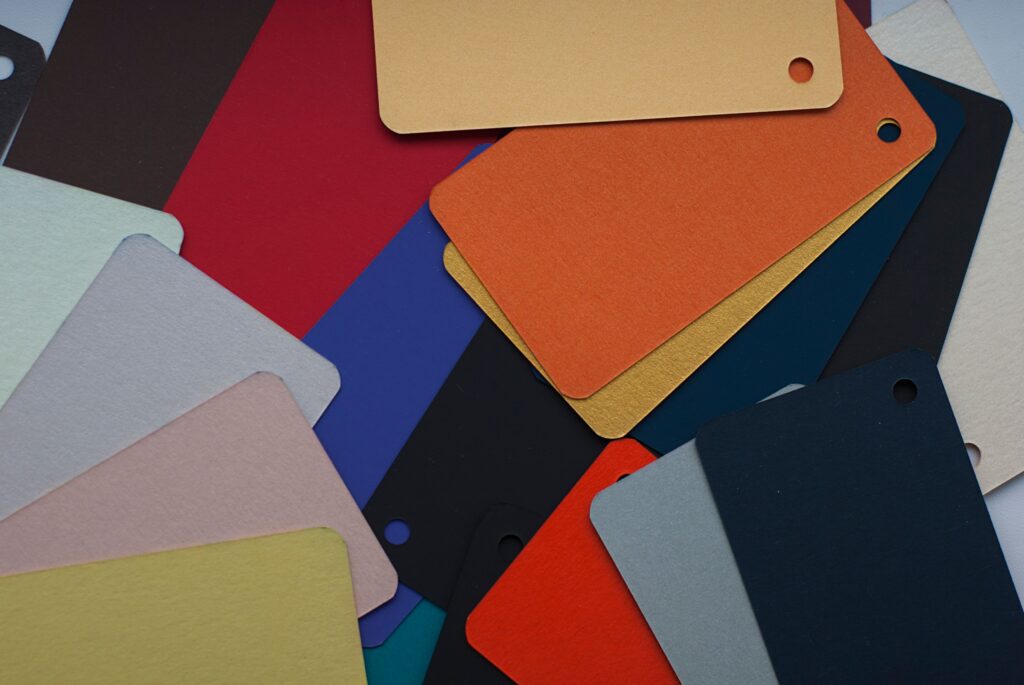
A direct mail piece makes a first impression before anyone reads a single word. Don’t treat paper as an afterthought.
- A heavy matte stock signals understated quality
- High-gloss finishes project vibrancy and energy
- Lighter stocks can work for high-volume campaigns but may not be perceived as marketing a premium product or brand
Finish matters, too. For example, matte tends to read as modern and refined, while gloss works well for brands that want color to pop. If sustainability is part of your brand identity (as it is for us), environmentally certified and recycled papers are increasingly available and more affordable, resonating with eco-conscious consumers.
>>Related: Make a First Impression With Direct Mail Marketing<<
Print to impress with specialty production methods
Today’s print production capabilities go far beyond ink on paper. Specialty stocks and finishes can elevate the perceived value, tactile experience and brand memorability that direct mail delivers.
- Die cutting. This method uses specialized machinery to create custom shapes that echo your logo, product or campaign theme. It also makes a mail piece more distinctive and harder to toss.
- Spot UV varnish. This coating technique applies a high-gloss to select areas of a mailer. The result? A matte-to-shine contrast that draws the eye straight to your headline, offer or call to action.
- Foil stamping. This printing process uses heat, pressure and metallic dyes to add visual interest elements and communicate premium quality. Foil stamping is favored for marketing high-consideration purchases because of its ability to create a luxurious effect.
- Textured and specialty papers. Textured papers add a sensory layer that impacts a buyer’s brand perception. For example, linen or laid stocks add sophistication and a traditional “feel” to your mailer. Duplex stock, which typically sandwiches a high-impact color between two lighter hue sheets, signals importance before a piece is even read due to its unusual thickness.
- Embossing and debossing. Embossing raises a design element above the surface of the paper, creating a tactile dimension that you can see and feel. Conversely, debossing presses the design into the surface for a recessed effect. Both work well for emphasizing elements such as a logo.
- Dimensional mailers. Dimensional formats like tubes, custom-shaped packages and 3D-printed elements command attention and are harder to ignore. Because they can’t be shuffled into a pile of flat mail, they’re especially effective for targeted, high-value campaigns to make a memorable first impression.
- Near field communication (NFC)-enabled mail. Using a small, embedded chip within a mailer, recipients can tap their smartphone to access a landing page, video or personalized offer, turning a regular postcard into an interactive experience.
Build your timeline before your creative
From paper procurement to printing to postal processing, your direct mail production timeline should be built backward from your intended in-home window. Miss a step and a piece may arrive after a holiday has passed or a promotion has ended.
A good rule of thumb is to build in more lead time than you think you need. Once you’ve run a few campaign cycles, you’ll have a clearer sense of the timeline and where there’s room to compress it.
Start smart with LS Direct
At LS Direct, we specialize in data-driven omnichannel campaigns that leverage the tangible impact of print. Request a demo to see what direct mail can do for your brand
FAQ
How far in advance should I plan a data-driven direct mail campaign?
Data-driven campaigns are highly effective, but they also add steps to the production process, because segmentation, personalization and file preparation all happen before anything goes to print. Paper procurement, print production, postal processing and delivery each have their own timeline, and delays at any stage can compound. Build your timeline backward from your intended in-home date, and factor in buffer time for each step.
What is bleed in print production and why does it matter?
Bleed refers to the area of a design that extends beyond the final trim edge of a printed piece. When a design element — a background color, image or graphic — is intended to run to the very edge of the finished piece, printing it may require a larger press sheet, which can add to your costs.
What is the difference between coated and uncoated paper stock?
Coated paper has a surface treatment that restricts ink absorption, resulting in sharper images, more vibrant color and a smoother feel. It’s the standard choice for image-heavy direct mail like catalogs and brochures. Uncoated stock absorbs ink faster, giving it a softer, more tactile quality that reads as more approachable and less corporate. It’s often used for copy-heavy pieces where readability and a personal tone are the priority.
What is embossing and debossing in print finishing?
Embossing raises a design element above the surface of the paper, creating a three-dimensional effect you can both see and feel. Debossing does the opposite — pressing the design into the surface for a recessed effect. Both techniques add a tactile dimension that photographs can’t fully capture, making them effective when the physical experience of holding the direct mail piece is part of the brand message.
How do offset and digital printing compare for direct mail?
Offset printing uses physical plates to transfer ink onto paper and is typically the more cost-effective choice for larger print runs where color accuracy is critical. Digital printing skips the plates entirely, making it faster to set up and better suited for shorter runs, variable data printing or campaigns that require personalization at scale, like printing a unique image or offer on each individual piece.